
To show up in AI search, do five things in order: let AI crawlers reach your pages, answer real customer questions in the first sentences, keep your business facts identical everywhere, use structured data to remove ambiguity, and earn mentions on other sites. None of it is exotic. Most of it is good SEO pointed at a new reader.
AI search is the growing set of places where a model reads a few sources and writes one answer instead of showing ten links: Google’s AI Overviews, ChatGPT with search, Perplexity, Gemini, Claude. Your goal shifts from ranking on a list to being named inside that answer. This checklist walks through each move, with the honest note on where Google says you can stop.
How do you get your business to show up in AI search?
You give AI systems a reason to cite you and a way to reach you. That means three ingredients working together: technical access so crawlers can read your site, quotable content that answers specific questions with specific facts, and consistent, credible signals about your business across the web. Miss any one and the model quotes a competitor instead.
The order matters because the steps depend on each other. Perfect content is wasted if a crawler is blocked. Open access is wasted if the content is vague. And great content on an accessible site still loses if your name, prices and location contradict each other across the web. Work top to bottom.
1. Let AI crawlers reach your site
Start by confirming your robots.txt does not block the crawlers AI tools use. If you have ever pasted in a blanket “block AI bots” rule, you may be invisible to the exact systems you now want to reach. This is the single most common, most fixable blocker we find.
The user agents worth allowing, as of 2026:
- GPTBot and OAI-SearchBot (OpenAI) power training and ChatGPT search results.
- ClaudeBot and Claude-SearchBot (Anthropic) handle training and search retrieval.
- PerplexityBot (Perplexity) crawls for its answer index.
- Google-Extended (Google) controls whether your content trains Gemini. Note the nuance: blocking it does not affect classic Google Search ranking, but it does opt you out of some AI training.
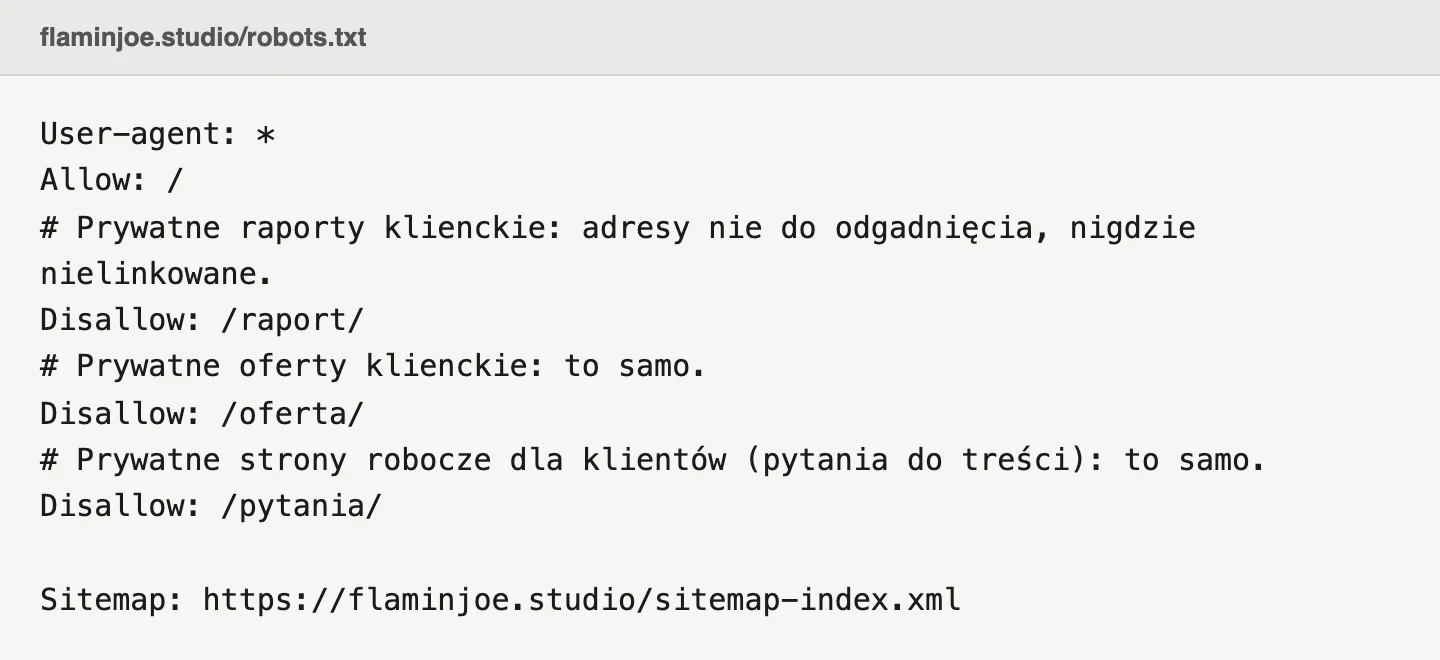
After access, hand the crawlers a map. A clean sitemap.xml, fast-loading pages and server-rendered text (not content that only appears after JavaScript runs) all help a model actually read what you publish. The optional llms.txt file belongs here too, though keep your expectations low; see what is llms.txt, and do you actually need it for why.
2. Answer real questions, answer-first
Write the way models like to read: put the exact question your customer asks in a heading, then answer it directly in the first one or two sentences, then expand. This “answer-first” structure gives a model a clean passage it can lift and attribute to you without guessing.
Three habits make content quotable:
- Turn headings into questions. “How much does a bathroom renovation in Gdynia cost?” beats “Our services.” Use the phrasing your customers actually use, which you can harvest straight from your sales calls and inbox. People talk to AI assistants in full, conversational questions, so long-tail, natural phrasing matches how the query arrives far better than a two-word keyword.
- Lead with the concrete. Prices, timelines, numbers and named specifics give a model something safe to cite. “From PLN 250, same-day callout” is quotable; “competitive pricing and a customer-first approach” is invisible to both people and machines.
- Cut the filler. Empty phrases like “world-class solutions” and “we go the extra mile” were already dead weight for readers and Google. AI models skip them for the same reason: they carry no fact to quote.
This is where classic content quality and AI visibility fully overlap. Specific, expert, human-written pages with clear authorship win in both worlds, which is the thread running through GEO vs AEO vs SEO.
3. Keep your business facts consistent everywhere
Make your name, address, phone number, hours and core offer identical across your site, your Google Business Profile, directories and social profiles. A model gathers signals from all of them, and when the facts conflict, it lowers its confidence and reaches for a competitor whose story is consistent.
This is the least glamorous step and one of the most decisive. If one directory lists an old phone number, another an old address, and your site a third version of your service list, you have handed the model three reasons to doubt you. Pick the correct version, roll it out everywhere, and keep it in sync when anything changes. The same discipline that helps a customer trust you helps a model cite you.
4. Add structured data, without over-investing
Structured data (schema.org markup in JSON-LD) labels your content for machines: this is an Organization, this is a Service, this is a price, this is an FAQ. It removes ambiguity and can help AI systems understand exactly what a page is about, so it is worth adding the basics: Organization, LocalBusiness, Service and FAQPage where they fit.
Now the honest limit. Google’s AI optimization guide states you do not need special schema, AI-specific rewriting or content chunking to appear in its generative features, because its systems already parse ordinary pages. So schema is a helpful clarifier, not a magic switch. Add the basics cleanly, then put your energy back into content and consistency rather than chasing every markup type.
5. Earn mentions and citations off-site
For AI models, being talked about across the web plays a role similar to backlinks in classic SEO. When credible sites mention your business, review platforms carry consistent ratings, and your name shows up in the right industry contexts, a model gathers more evidence that you are a real, recommendable option.
You do not need a PR agency to start. Get listed accurately in the directories that matter for your industry and location. Ask happy customers for reviews right after the job, with a direct link, because a steady flow of recent, specific reviews is one of the cheapest trust signals you can build. Contribute genuine expertise where your audience already reads. Each mention is a dual-use investment: it works on Google and in AI answers at the same time.
What does Google officially recommend?
Google’s own position, in its AI optimization guide updated June 2026, is that optimizing for its generative AI features is “still SEO.” Its AI Overviews and AI Mode are built on the core Search index using retrieval-augmented generation and query fan-out, so the fundamentals that earn rankings, useful content, crawlable pages and clear structure, are what earn AI visibility too.
Take that as reassurance, not a full map. Google is describing Google. ChatGPT, Perplexity and Claude run their own crawls and weight signals their own way, which is why the crawler-access and off-site steps above matter more for them than for Google. Build the foundations Google names, then layer on the AI-specific work for the assistants your customers also use.
Where to go from here
Do these five things and you have covered the ground that matters for most small businesses. Two follow-up questions usually come next: how do I know if it worked, and where does this sit against classic search? For the first, use a repeatable method rather than a one-off glance, which we lay out in how to measure AI visibility. For the second, AI visibility vs SEO draws the line between ranking a list and being named in the answer, and explains why most of this work pays off in both channels at once.
If you would rather have the full picture scored for you, that is what our AI visibility audit delivers: 39 criteria across the 6 areas above, a repeatable measurement of what ChatGPT, Gemini, Perplexity and Claude say about you, and an expert reading with a prioritized fix list. You get at least 5 concrete fixes with instructions, or a full refund. Want to start free and broader? The 3-minute marketing audit scores your whole marketing first.
FAQ
How long does it take to show up in AI search? There is no fixed timeline, because it depends on how often the AI systems recrawl your site and refresh their answers. Access and consistency fixes can register within weeks; content and off-site trust build over months. Measure the trend over time rather than checking once and expecting an instant change.
Do I need to block or allow AI crawlers? If you want AI visibility, allow the main ones (GPTBot, OAI-SearchBot, ClaudeBot, PerplexityBot). Blocking them keeps you out of the systems you are trying to appear in. Google-Extended is a separate choice about AI training that does not affect your normal Google ranking.
Is schema markup required to appear in AI Overviews? No. Google states you do not need special schema for its generative features, and its systems read ordinary pages fine. Basic structured data still helps clarify what a page is, so add the essentials, but do not treat markup as the thing that decides whether AI cites you.
Can I do this myself, or do I need an agency? Most of it is doable in-house: checking robots.txt, rewriting a few key pages answer-first, tidying your business listings, asking for reviews. A paid audit is worth it when you want the whole picture scored, prioritized and measured against competitors rather than guessing which fix comes first.